TDS on sale of property in India: HOW TO FILE TDS – Section 194IA
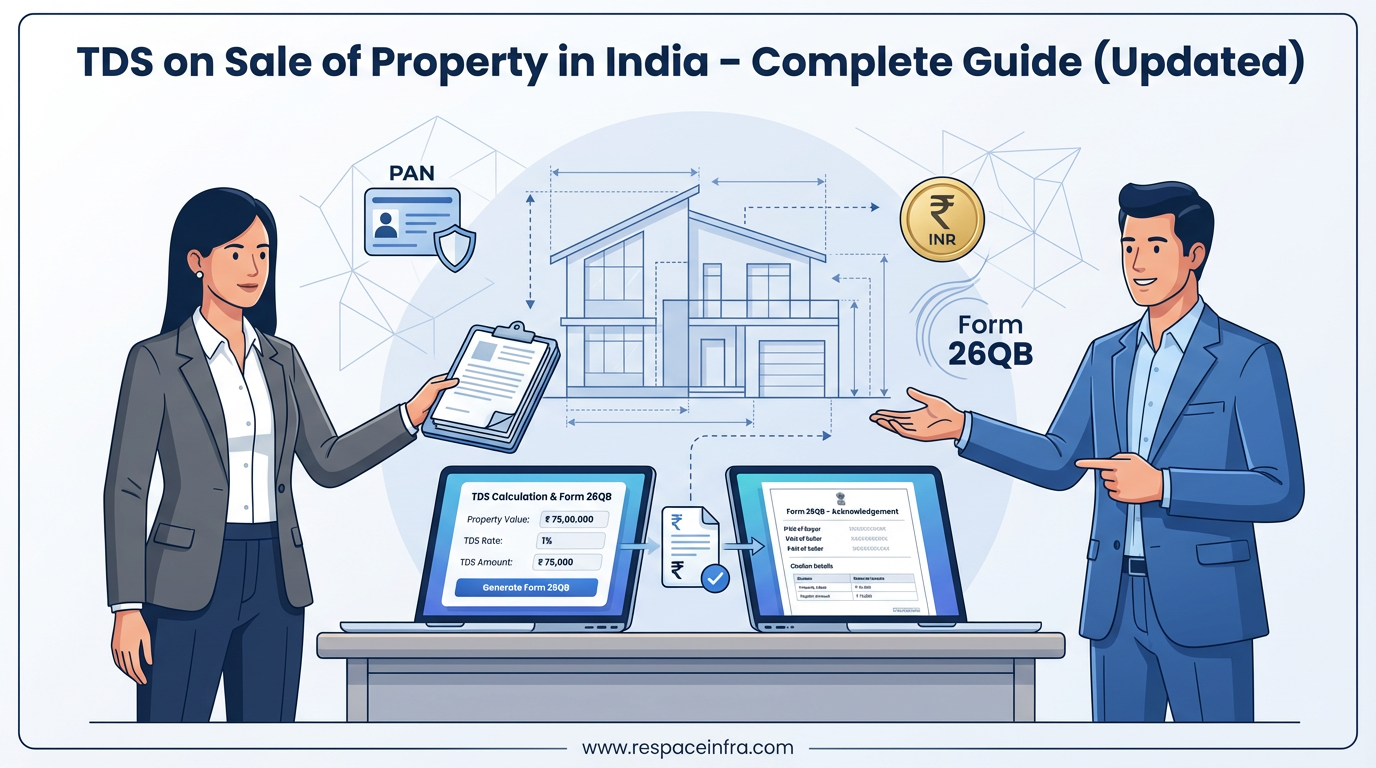
TDS on property purchase, Section 194IA, TDS on real estate, how to file TDS form 26QB, TDS on sale of property above 50 lakh, property buying process India Buying a property in India involves several financial and legal steps, and one of the most important among them is TDS on sale of property Many homebuyers are confused about how TDS works, who deducts it, and when it needs to be paid.
Here’s a simple and updated explanation.
If you need help with this process, you can always contact +91 92054 56766 | +91 83840 58321.
What is TDS on Property Purchase?
TDS (Tax Deducted at Source) is a tax collected by the government directly at the source of income. Under the Income Tax Act, 1961, the Central Board of Direct Taxes (CBDT) administers TDS on various financial transactions—interest earnings, commissions, dividends, rental payments, and property transactions. For real estate, TDS is mandatory when you purchase a property costing above ₹50 lakh. The deduction can range from 1% to 30%, depending on the type of income and whether the seller is a resident or NRI.
Properties Covered Under TDS – Section 194IA
As per Section 194IA, the buyer (not the seller) must deduct 1% TDS on the sale value if:
- ✔ The property value exceeds ₹50 lakh
- ✔ The property is residential, commercial, or land (non-agricultural)
Agricultural land is not covered under this rule.
For NRI sellers, TDS is different—usually 20% to 30%, because it includes capital gains, and is deducted directly by the government.
Scope of Section 194IA
The law states that the buyer (transferee) must deduct 1% TDS from the payment made to a resident seller for the transfer of any immovable property (excluding agricultural land).
This deduction must be made whichever is earlier:
- ✔ At the time of crediting the amount to the seller
- ✔ At the time of paying the seller (cash, cheque, draft, or any other mode)
When & How to Deduct TDS on Property
If a buyer is using a Home Loan, TDS can be deducted at two stages:
1. At the execution of the conveyance deed
2. When making advance payments before execution
To pay the TDS, the buyer must fill Form 26QB, available online on the TIN portal. The form will ask for:
- ✔ Buyer & seller names
- ✔ PAN numbers
- ✔ Addresses
- ✔ Email IDs
- ✔ Mobile numbers
- ✔ Agreement date
- ✔ Payment date
- ✔ Total property value
After deduction, the buyer must issue Form 16B to the seller as proof of TDS deposited.
If multiple buyers or sellers are involved, separate 26QB forms must be filed for each share.
Documents & Details Required for TDS Payment
While deducting TDS on sale of property, the buyer usually needs a TAN (Tax Deduction Account Number).
However, buyers do NOT need a TAN for TDS on Property Purchase under Section 194IA.
Information required includes:
- ✔ Buyer & seller details
- ✔ Complete property address
- ✔ Agreement date & payment date
- ✔ Total purchase consideration
- ✔ Contact details
After meeting the home loan eligibility criteria, buyers can pay TDS through:
- ✔ Net banking
- ✔ Authorized bank branches
- ✔ Finance companies (in some cases)
Final Advice
TDS compliance is mandatory and failure to comply can lead to penalties.
If you’re buying property above ₹50 lakh, make sure you file your TDS Form 26QB correctly and issue Form 16B to the seller.
Need Help Filing TDS or Buying Property?
If you want more help or information, contact Respace Infra — we will help you in filling it.
📞 +91 92054 56766 | +91 83840 58321
Read More on Our Blog
We cover more real estate, property tax, and home-buying guides on our blog.
👉 Search our blog page for more detailed articles:
📌 https://respaceinfra.com/blogs/
